✳ SACRED CARTOGRAPHY
← All journeys

Layers of the Cosmos

Some images arrange heavens around Earth. Others picture sacred continents, spiritual levels, or subterranean systems.

A curated route through the collection, not a historical claim in itself. Visit the cosmogram for orientation →

Progress: Stop 1 of 9

Hildegard’s cosmos as an egg
STOP 1 OF 9

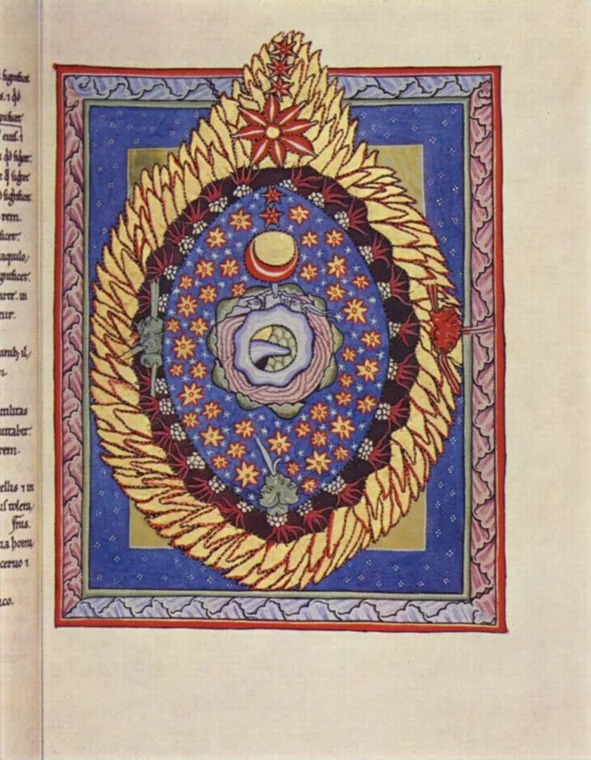
Hildegard’s cosmos as an egg

Original c.1165; surviving facsimile 1927 · Rupertsberg, Germany

Notice the egg-shaped boundary and the contrast between fiery exterior and starry interior. Read as visionary cosmology, not a surveyed map or Earth cross-section.

The substantial sphere: Sacrobosco in Italian
STOP 2 OF 9

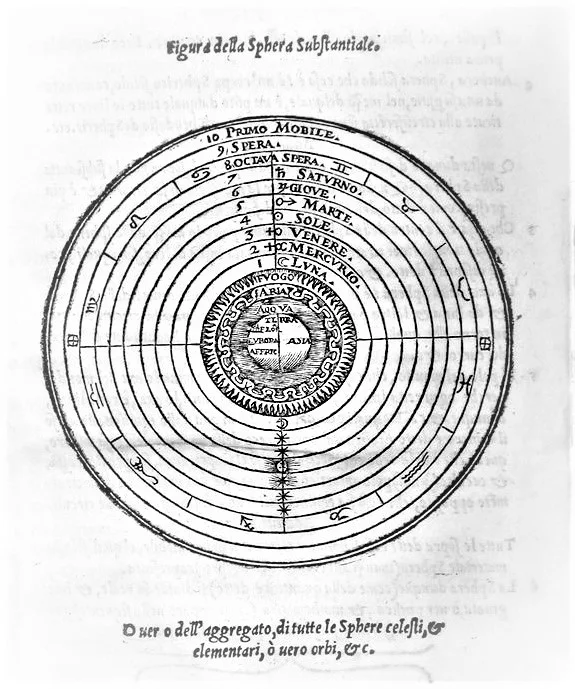
The substantial sphere: Sacrobosco in Italian

1537 · Venice, Italy

Follow the labels outward from Earth. These are celestial and elemental spheres, not geological shells inside Earth. The image is a 1537 printed witness to a medieval tradition, not a thirteenth-century manuscript.

Apian and Frisius: the division of the spheres
STOP 3 OF 9

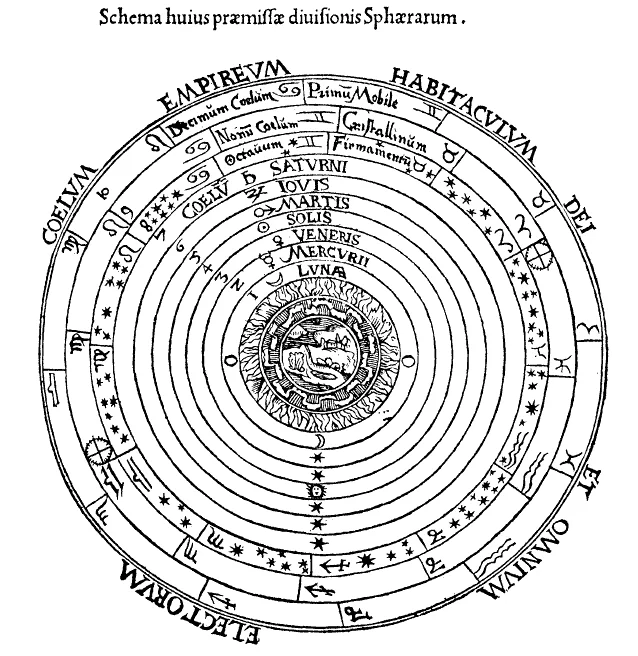
Apian and Frisius: the division of the spheres

1539 edition · Antwerp, Low Countries

Read the successive labels, not just the rings. Planetary heavens surround Earth; they are not continents or layers within a hollow planet.

Fludd’s wedge of metaphysical spheres
STOP 4 OF 9

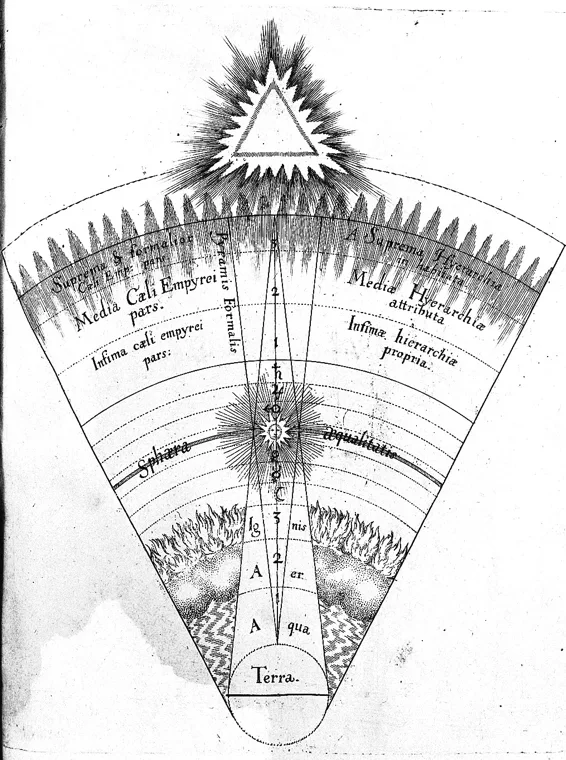
Fludd’s wedge of metaphysical spheres

1617 · Oppenheim, Germany; English author

Trace the vertical ascent and widening bands. The cutaway is a metaphysical hierarchy, not an empirical section through the Earth.

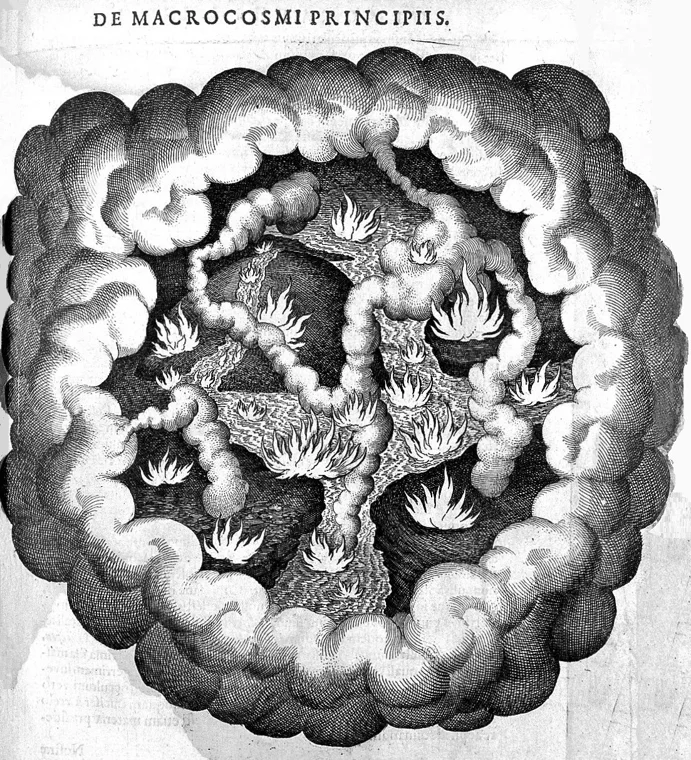
Fludd: principles of the macrocosm
STOP 5 OF 9

Fludd: principles of the macrocosm

1617 · Oppenheim, Germany; English author

Notice the alternating dark, light, cloud-like, and fiery forms. This is a cosmogonic illustration rather than a map of terrestrial land or a literal geological cutaway.

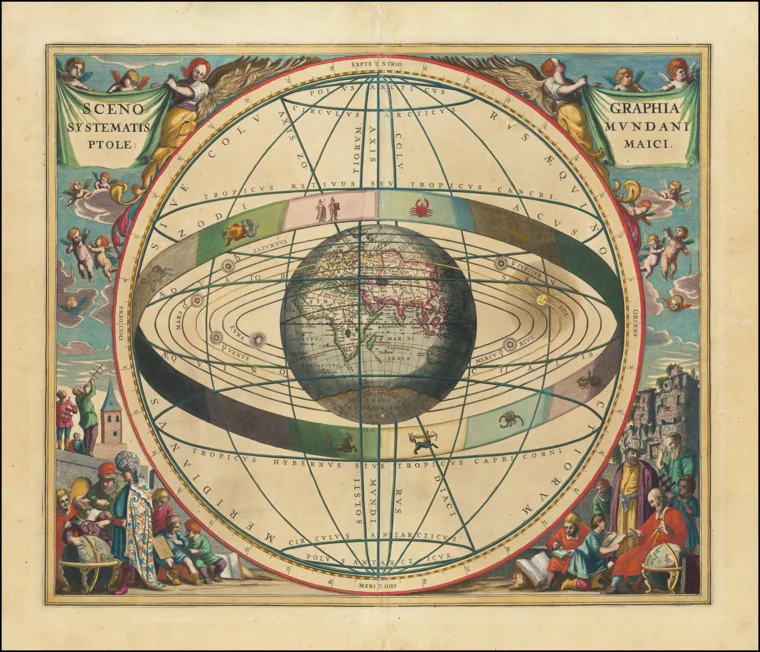
Cellarius: the Ptolemaic cosmos in perspective
STOP 6 OF 9

Cellarius: the Ptolemaic cosmos in perspective

1660 · Amsterdam, Netherlands

Locate Earth before following the surrounding paths. The globe is a component of a celestial model, not the subject of a geographic survey.

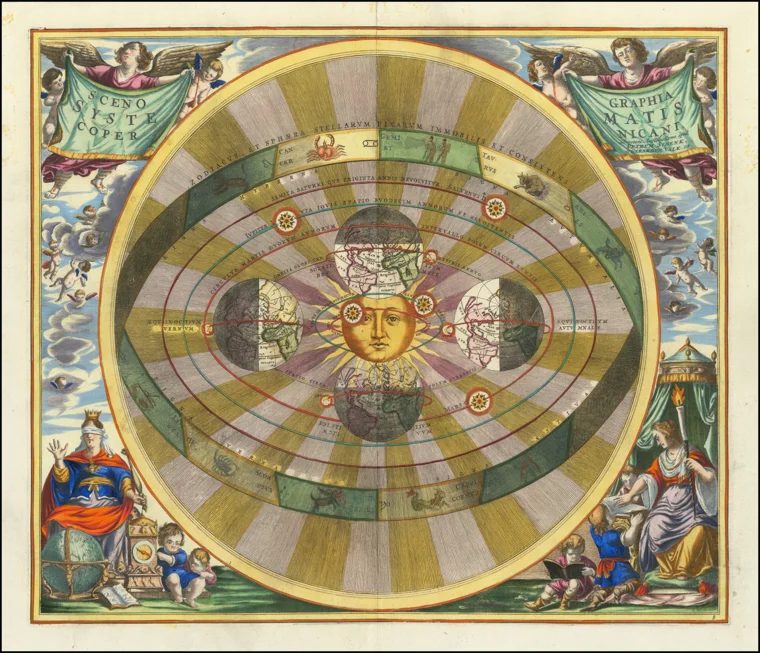
Cellarius: the Copernican cosmos in perspective
STOP 7 OF 9

Cellarius: the Copernican cosmos in perspective

1660 · Amsterdam, Netherlands

Find the central Sun and distinguish planetary paths from solid inhabited shells. This is heliocentric astronomical ordering, not a hierarchy of spiritual realms.

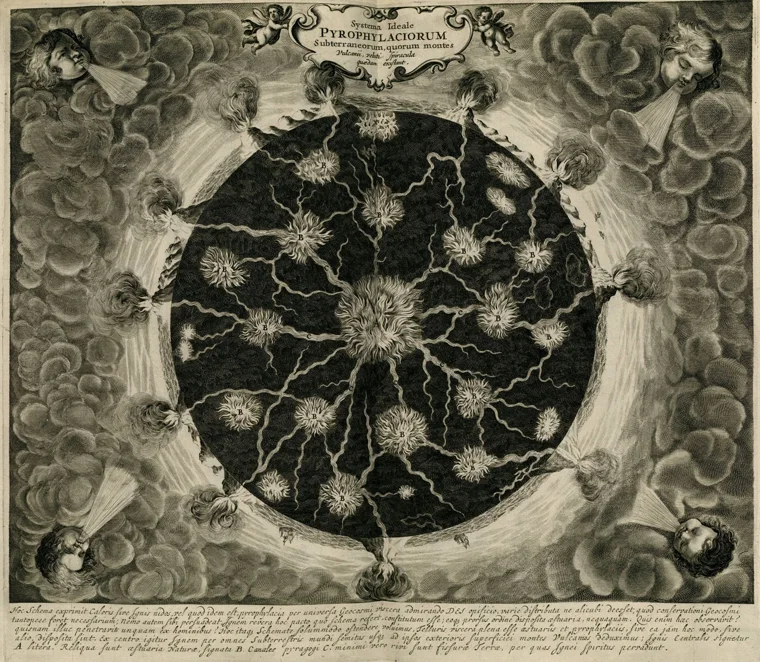
The Earth’s subterranean fire channels
STOP 8 OF 9

The Earth’s subterranean fire channels

1664, as catalogued · Earth interior

Look for branching connections between inner fire reservoirs and the surface. This is a natural-philosophical model, not modern seismology or evidence of an inhabited hollow Earth.

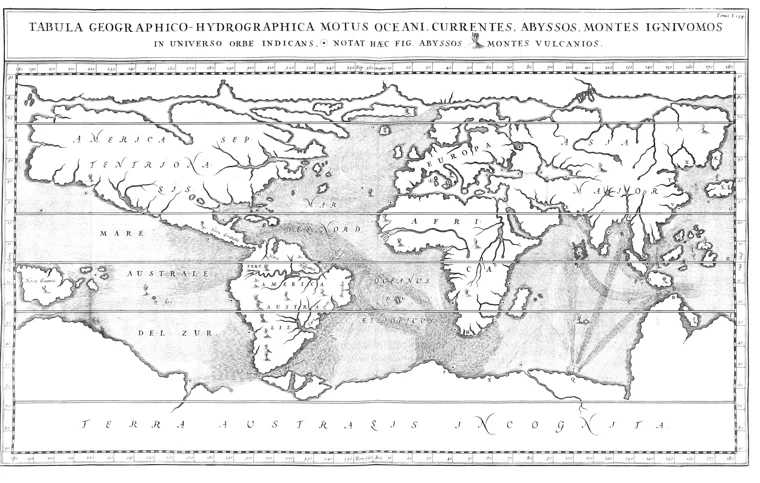
Kircher’s world of currents and subterranean connections
STOP 9 OF 9

Kircher’s world of currents and subterranean connections

1665 · World oceans

Compare ocean markings with the fire diagram. Kircher joins surface and interior explanations; his hypothetical mechanisms are not measured subterranean passages.